


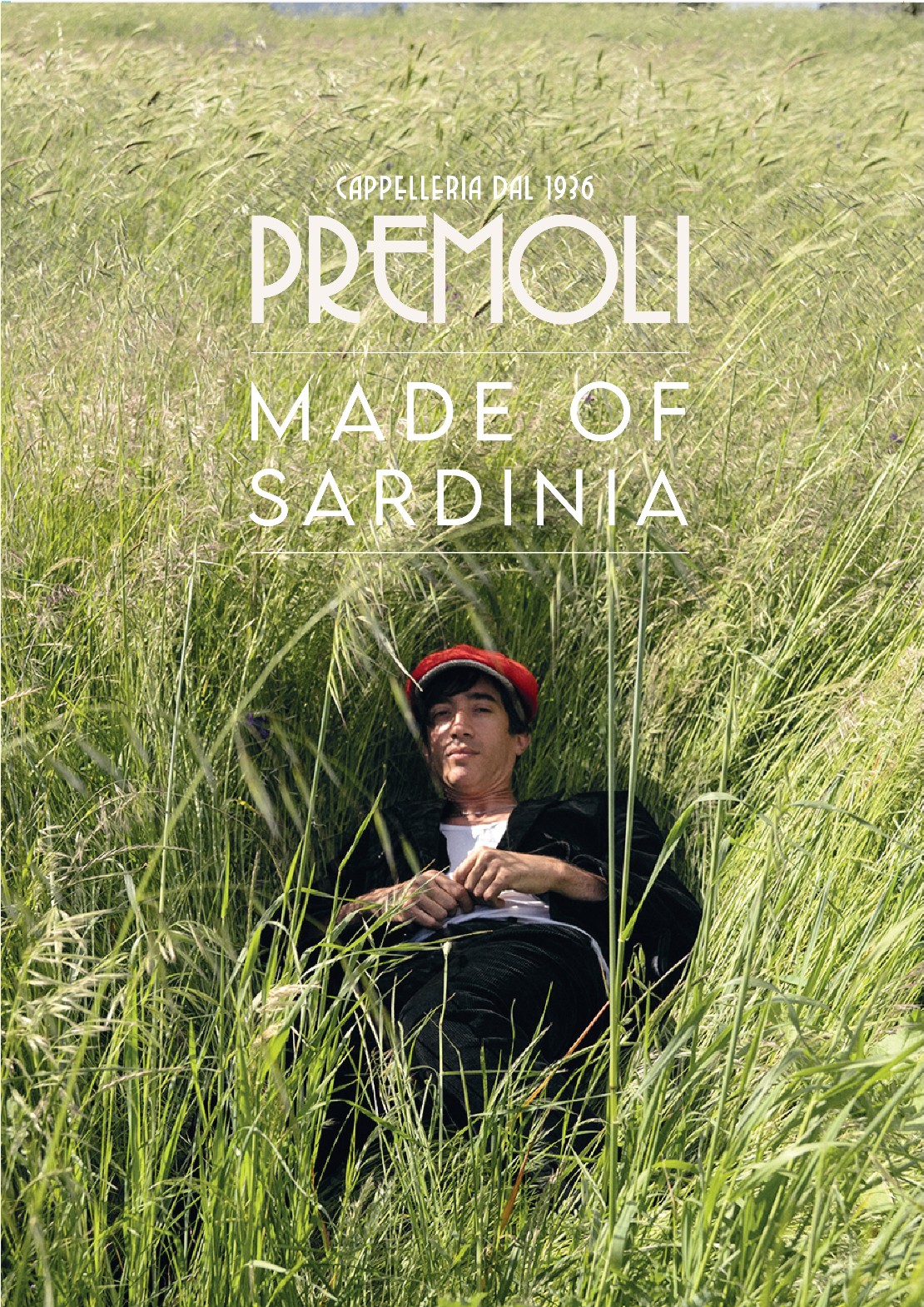
MADE OF SARDINIA
The Premoli collection has remained true to the vision of its founder, an artisan driven by the desire to pass on culture, tradition, and style through a simple yet precious piece: the hat.
From that moment forth, the Premoli family has not only reinterpreted traditional designs, but celebrated every fibre, every stitch, and every distinctive feature of their items. Premoli hats are not just made to be worn, they are made to support living in Sardinia: they shield from biting cold, from driving rain, and, most importantly, from the intense sun that penetrates the island in the summer months.
Their rich colours and understated, yet recognisable, patterns tell stories of landscapes, traditions, and the profound silence of the places from which they emerge. That is why it’s fair to say that Premoli hats are “Made of Sardinia”, crafted from the very same substance as the land that inspired them, a weave of history, culture, and identity.
ORBACE, THE FIBER OF SARDINIANS
A commitment to sourcing high-quality raw materials, combined with a deep connection to their homeland, led the Premoli family to adopt a remarkable fabric in the production certain hats: orbace.
Whilst it became historically associated with the uniforms of Fascist officials, this wool deserves to be remembered in a more appropriate manner given its ancient origins and enduring ties to Sardinia.
Orbace is a fabric known for its exceptional strength and durability, offering protection against cold, heat, and rain, given that it is almost impermeable.
Sardinian shepherds traditionally used it as a cloak, which could double as a blanket. Its qualities also made it a staple among sailors, frequently being used to produce the capes and heavy overcoats often worn by officers.
In the past, only women were entrusted with the carding and spinning of the wool and, in many areas, preferably blind women, who were said to produce a more consistent and refined thread thanks to their heightened sense of touch.
The wool from Sardinian sheep is rather fine, yet strong, and only the fleece from the back of the sheep, where it is at its softest, is used for orbace. The carding process (“pettenatura”) further refines the selection, with only the “flower” of the wool, the longest and softest fibres, being used to prepare the warp.
Traditionally, the skeins would be immersed in hot water and trampled on barefoot for twelve hours a day for three to four days in order achieve even greater softness. In more recent times, this process has beenreplaced by a machine, known as the Gualchiera, that relies upon small hammers
Natural dyes were used in the colouring process: alder bark for red, euphorbia for yellow, and wild thistle roots with vitriol for black.
Hand weaving orbace is a demanding craft. A single weaver, working without interruption, can produce only one metre per day on average.
This process is still carried out within families, and it remains rare for artisans to allow outsiders into their workshops.
Orbace is more than a fabric, it is a millennia-old Sardinian heritage that deserves to be fiercely protected. Thanks to Cappelleria Premoli, however, its extraordinary properties can now be enjoyed by many, woven into the fabric of Sardinian life.